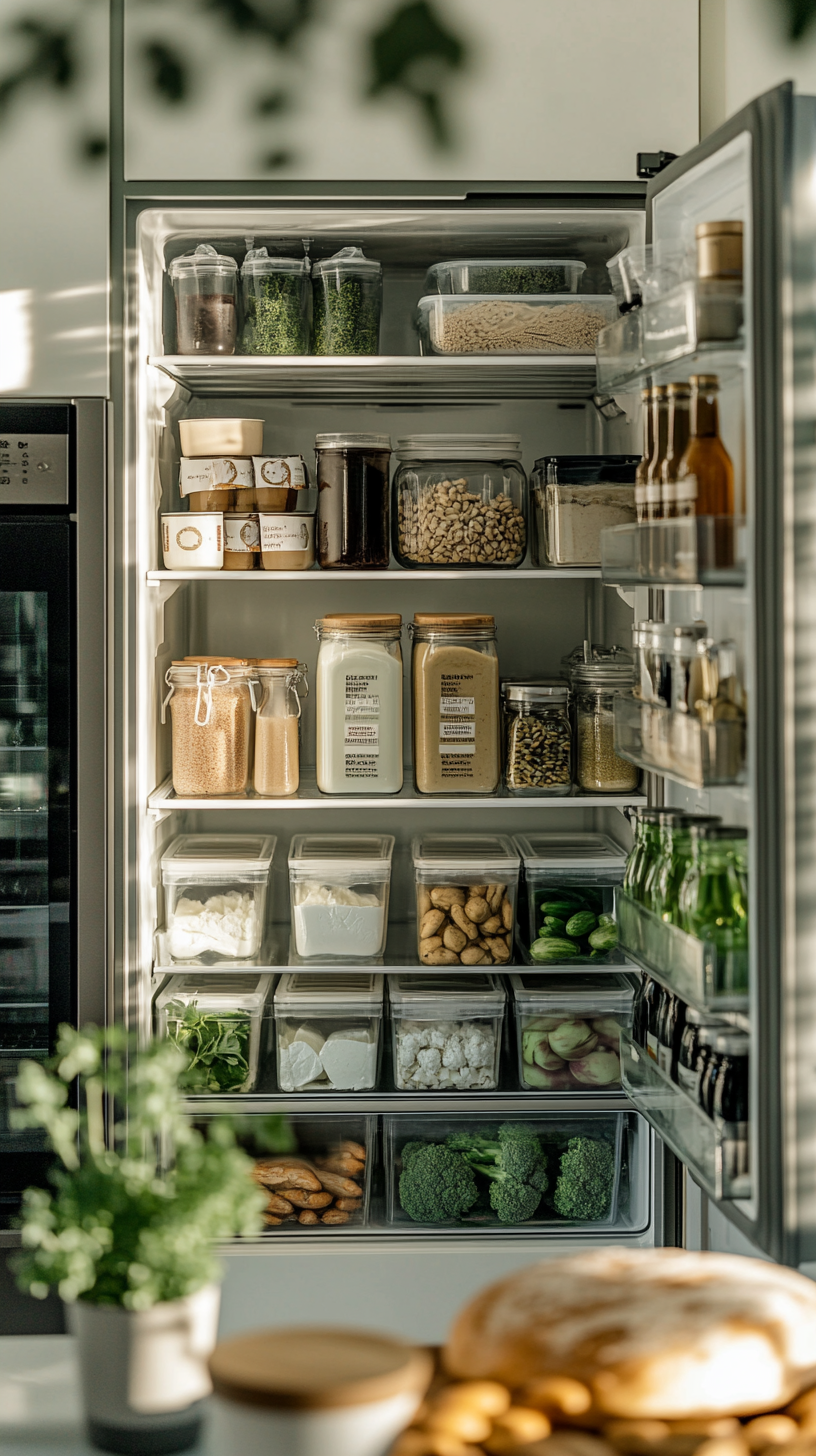
An organized fridge doesn’t just look good — it helps reduce food waste, saves time during busy weeks, and supports healthier eating habits. Whether you live alone or share a space with family or roommates, a well-organized refrigerator is a small daily luxury that makes a big difference. This guide walks you through a full fridge reset, smart zone planning, clear container systems, and labeling tricks that bring order and calm to your everyday kitchen life. These routines are perfect for anyone dreaming of a Pinterest-worthy fridge that’s not just pretty, but actually functional.
1. Start With a Full Reset
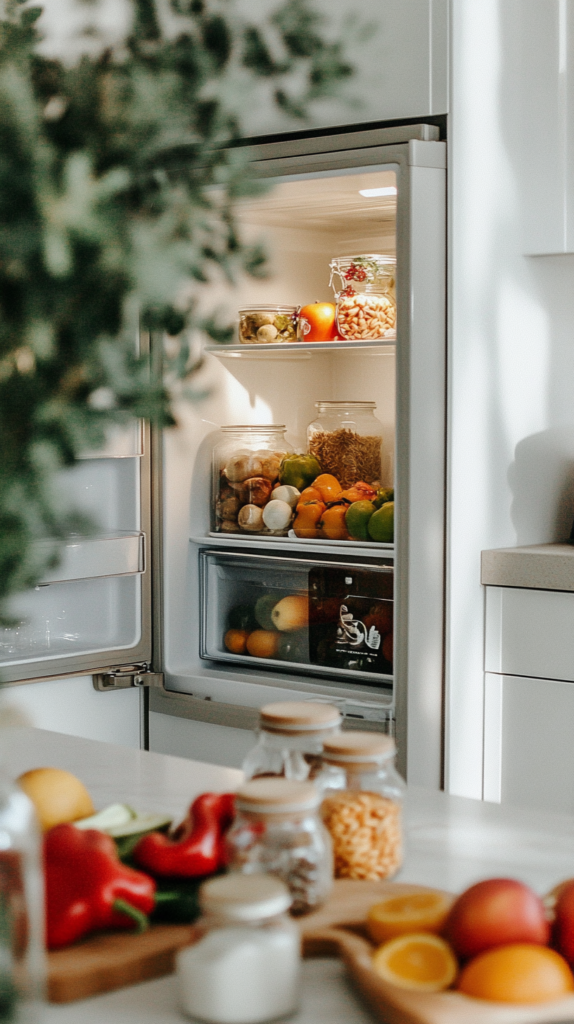
What to do:
- Unplug or turn off your fridge temporarily if needed for deep cleaning
- Remove absolutely everything — yes, everything
- Check all expiration dates and toss what’s no longer good
- Wipe shelves and drawers with warm water + baking soda or white vinegar spray
- Let all surfaces dry fully before restocking
- Group your items by category (dairy, condiments, snacks, veggies, etc.) on the counter to assess how much of each you have
Extra tip: Keep a compost bin nearby and a notepad to jot down what went unused — this helps refine your grocery shopping next time.
2. Zone Your Fridge Like a Pro
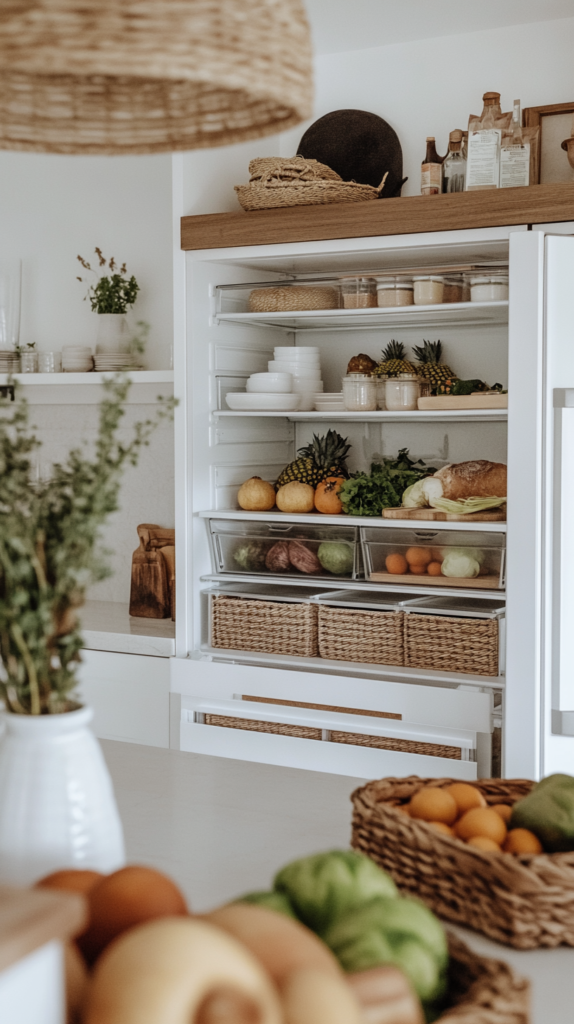
Suggested fridge zones:
- Top Shelf: Ready-to-eat items like yogurt, overnight oats, and drinks
- Middle Shelf: Leftovers, meal prepped lunches, or ready-to-cook meals
- Bottom Shelf: Raw ingredients like meat or seafood (always stored low to avoid cross-contamination)
- Drawers: Label for “Fruits” and “Veggies” to reduce overbuying and forgetfulness
- Fridge Door: Items that are shelf-stable longer like condiments, sauces, dressings, or drinks
Extra tip: Create a small “eat me first” bin for leftovers or perishables — a great hack to reduce waste and remind you what needs to be eaten soon.
3. Invest in Clear Containers That Stack & Fit
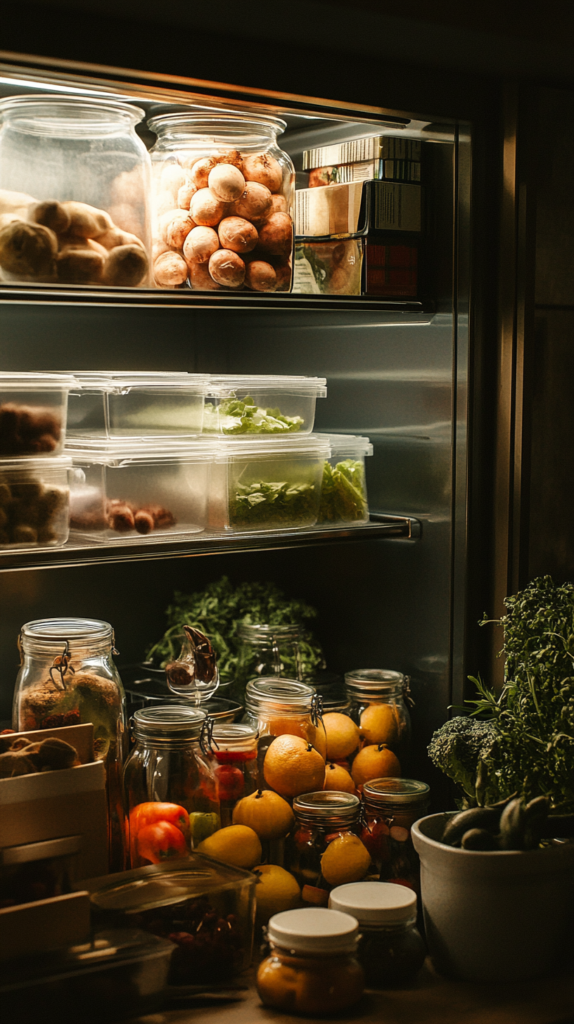
Tips for container systems:
- Use BPA-free or glass containers for meal preps and leftovers (glass = better visibility and durability)
- Buy uniform sizes that stack easily to prevent waste of vertical space
- Store chopped veggies or fruit in visible bins to encourage healthy snacking
- Use fridge-safe lazy Susans or turntables for small jars and condiments in hard-to-reach corners
- Include one bin just for kids’ snacks or smoothie ingredients to streamline mornings
Extra tip: Amazon and The Home Edit offer excellent fridge-specific containers — look for sets with pull handles and built-in drainage trays for produce.
4. Label Everything — It Actually Works
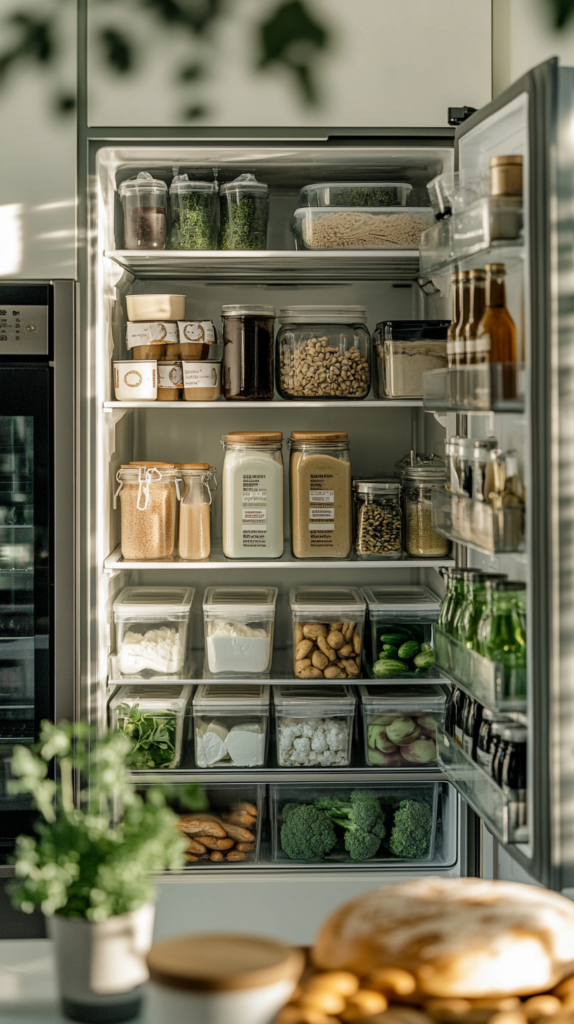
How to label like a minimalist:
- Use waterproof vinyl labels or a label maker for permanent bins (e.g. “snacks,” “veggies,” “sauces”)
- For leftovers or open jars, use removable masking tape + a fine-tip marker for the date and contents
- For shared fridges, color code or name bins for each person
- Label drawers like “Ready to Eat” / “Use Soon” / “Lunch Prep” for better visibility
Extra tip: This is the single easiest system to implement with the biggest payoff in reducing food waste.
5. Create an Easy-Grab Snack & Meal Prep Zone
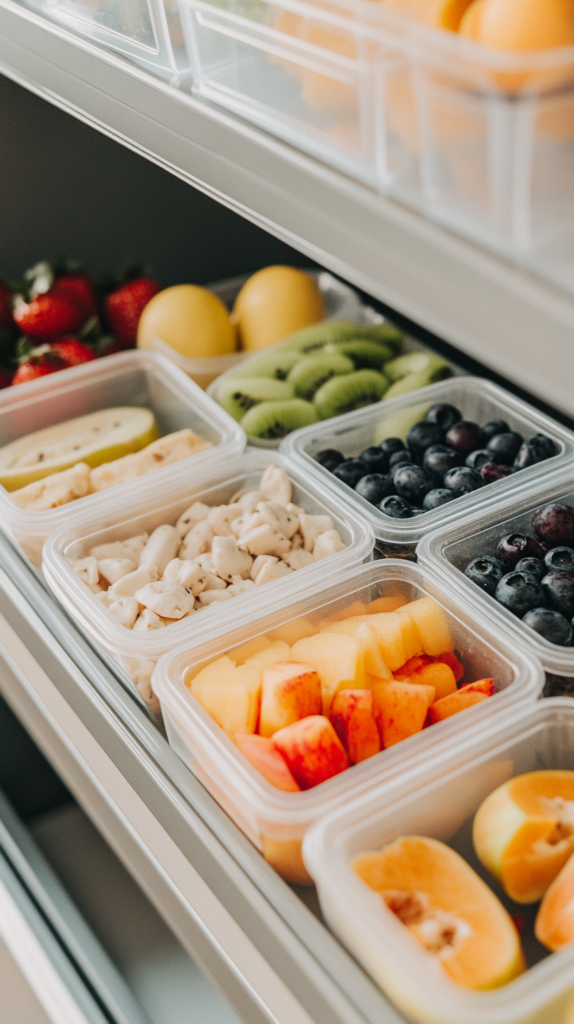
Why you need one:
- Keeps school lunches or work meals ready to go
- Encourages healthy choices during the 3 PM crash
- Saves time during the week — fewer decisions, more structure
- Perfect for organizing grab-and-go breakfast (overnight oats, boiled eggs, muffins)
Bonus tip: Add a bin labeled “Need to Prep” to remind yourself what still needs to be washed, sliced or cooked.
Final Thoughts: A Calm Fridge = A Calm Mind
A well-organized fridge is like a quiet morning — it sets the tone for everything else. With a clear system, labeled zones, and containers that work for you, meal prep and everyday snacking become simple and even joyful. This is more than just storage — it’s a lifestyle rhythm. And if you’re ready to take it further: you can always add fridge-safe spice jars, magnetic labels, or even motion-sensor lights. Your future self will thank you.
Note: The image prompts in this post were created using AI for visual inspiration. Some links in this article may be affiliate links. If you purchase through them, we may receive a small commission — at no extra cost to you.